Friday, March 09, 2012

Indefinite Sabbatical for AppleHouse


It's a good thing because it gives me more time to work on Real Port Talbot, a book I've been commissioned to write about my hometown in South Wales, which will be published in November 2013. And you know how one project can easily and excitingly lead into another.

And it's a sad thing because I will miss this concentration of poetry, your voices, our conversations on this blog.

But the AppleHouse site will remain up for people to browse through. These have been wonderful years and there will be more in the future, I am sure.

Let me leave you with the following poem that appeared on The Writer's Almanac today.

Keep saying it too. And stay in touch.

L xx


Saying It

Saying it. Trying
to say it. Not
to answer to

logic, but leaving
our very lives open
to how we have

to hear ourselves
say what we mean.
Not merely to

know, all told,
our far neighbors;
or here, beside

us now, the stranger
we sleep next to.
Not to get it said

and be done, but to
say the feeling, its
present shape, to

let words lend it
dimension: to name
the pain to confirm

how it may be borne:
through what in
ourselves we dream

to give voice to,
to find some word for
how we bear our lives.

Daily, as we are daily
wed, we say the world
is a wedding for which,

as we are constantly
finding, the ceremony
has not yet been found.

What wine? What bread?
What language sung?
We wake, at night, to

imagine, and again wake
at dawn to begin: to let
the intervals speak

for themselves, to
listen to how they
feel, to give pause

to what we're about:
to relate ourselves,
over and over; in

time beyond time
to speak some measure
of how we hear the music:

today if ever to
say the joy of trying
to say the joy.


Monday, January 30, 2012

There's always the weather.

This month I've been taking part in a River of Stones, an international writing project organised by Fiona and Kaspa, that encourages participants to write a small 'stone' every day. I know some of you have joined in too but if you haven't you can read more about it here.

The project may run again in July (it did last year) and I'll join in again. The discipline of stopping and looking around my world, the physical, intellectual and emotional ones, for a few moments and noticing what's there, what's really there, not what I think is there, is always a good one.

Today's writing prompt comes from one of my River posts which is why it doesn't have a title... yet.

Rain overnight and this morning
not a crackle of frost on the trees
or along the kerb around the yard
only a mist of grey above
and between the bare branches.

I miss the hills, the green roll
of them swallowed by cloud.
The day is too soft for clear thought.


Write about the weather, about yourself immersed in weather, or a rant against a particular kind of weather. Or a poem in praise of weather. About rain, or snow, or unexpected weather, or reliable weather. About the emotions the weather stimulates in us. About the memories it ignites.

Write well.
L
x

Thursday, January 05, 2012

And what will you do this year?

Where will you go?
Who will you speak with?
What will you dream?
How will you resolve any problems or difficulties?
What will you begin?
What will you give up?
Who will inspire you?

Write a poem that begins:

This year I will...

It doesn't have to be factual. It can be imaginary, or wishful, or fantastic too.

Write wildly at first. Worry about shaping and editing later. Keep going for at least 10 minutes without stopping to judge or change your mind.

I look forward to reading your final drafts of your year ahead.

Write well.
L x

Thursday, December 08, 2011

Celebrating one of our own

Many congratulations to Catherine (Foster) for winning 1st Prize in a competition run by First Time magazine with her powerful poem, The Prodigal Son. And thank-you, Catherine, for sharing it with AppleHouse:

The Prodigal Son

It’s the hogshit stink rising with the sun
that’s done for me.
My hands webbed, gloved with the stuff.

And the cornhusks: dry as old harlots I’ve had
when shekels ran low.

One shindig after another. Sex
like shooting stars. My belly a wineskin,
now scooped out, shrivelled as the last fig of summer.
Birds could perch on each rib.

A cowl of shame.
Dare I shadow my father’s house?
The utterance of my name- 
each letter an ulcer on his tongue?
Will I be but a mote of dust
shooed out by his hirelings?

I set off, sandals flap like dying fish.
Vultures fidget in my path.

My Father-     
arms outstretched in folds of the wind.
I stagger, kneel.
The forgiveness of a fatted calf,
purple robes to cover skin pleated over bones.
Words of silver to quench my thirst.
My son who was lost is now found.

And my brother?
He vomits envy.   


I thought it would be a good idea to set a poetry prompt in response to Catherine's poem. Choose a biblical character and write a poem in their voice. 'Persona' poems, as they're called can be written in a number of ways:

1. You stay true to that character's experience and re-tell their story.
2. You use that character as a mask to talk about your own concerns (e.g. using the voice of Eve to talk about feminist issues)
3. You update the character and their story and give it a contemporary 21st century spin.

There's no shortage of characters to choose from and given the season you might even like to choose one from the nativity story.

Looking forward to reading your work.
Write well.
Lynne
x

Wednesday, November 16, 2011

Oven cleaner, apples, open fires

Hello from Kent where I've spent more time inside the oven that I really wanted to and where the cardboard boxes are gradually diminishing. But not in my writing room. We left all our library shelving in the house in France so I'm waiting for new pine bookcases and a new pine desk which won't be here until after Christmas. It's not that I really need access to all my books but I do feel better when they are all facing me, the bright colours and words on their spines smiling at me as I pass, and not lying on their backs in the dark. But not long now.

Home means apples - there are 20 acres of apple trees just outside my door. It means log fires - we've kept the wood stove alight 24/7 since being home. An open fire in late autumn and winter is one thing I really missed in the house in France.

This week I've paired things that I haven't paired before: apples and sausage-meat (for a savoury supper), and big paintings and little paintings (to create a different effect on the walls in the lounge and kitchen:


Placing them next to each other like this made me think of haiku, of the phrase and fragment (or fragment and phrase) construction a lot of contemporary haiku take:

The haiku at the end of my last post was phrase/fragment:

fall, yet new leaves
on the plane trees:
we pack to go home

The longer part of the haiku, the phrase, extends over the first two lines and the fragment (a single image or comment) is confined to the third.

Free verse poetry can play with similar constructions e.g. long lines alternating with short lines, or perhaps a poem made up from regular stanzas that closes with a single line set apart at the end. The poet's craft lies in knowing why we do this, the effects that changes in pace will have on the reader, on their breathing, how isolating lines will change their relationship to the words on the page.

Write a poem that changes its form at some point during its development. Think about:
long lines
short lines
changes in stanza structure
a poem of two halves
long sentences
short phrases

But choose your subject matter to suit this form change. Remember that form arises from subject matter, that it can be used to effectively reflect emotional tone.

Write well.
L
x

Thursday, October 20, 2011

Goodbye and au revoir. And quite soon, hello again.

Many thanks to those of you who posted poems in response to the end of September's prompt. Catherine, Keith, Martin, Glen, Jim, Anne - I'm sure you'll understand that organising the move from France to the UK has got in the way of me responding individually to you all as I usually do.

And thank you to everyone who has written a poem and posted it to AppleHouse over the last fours years and those of you who follow the blog and pop in to see what's happening every now and then. Yes, four years! AppleHouse began in December 2007 and I never anticipated that I'd still be here in 2011.

But I am and you are too. And once I get settled into our home in the UK I'll be back with more prompts and ideas and look forward to reading more of your poems.

See you next month.
L x

fall, yet new leaves
on the plane trees:
we pack to go home

Monday, September 26, 2011

Changes


Hugging the Plane tree in the garden
when we first arrived
I'm moving from the South of France back to the UK at the end of October. I have mixed feelings about the move. We've achieved so much here but it hasn't always been easy (you can read a little bit more about it here).
I'm not at the point of having to say goodbye yet but it does seem that I spend a lot of time thinking about it.

The end of September.
All traces of our summer guests
have gone: sand rinsed from showers,
beach towels folded away.

Under the terrace
the deflated paddling pool
gathers leaves.

We will not be here
much longer: palm trees, the Mistral,
the smell of coconut oil
at the supermarket check-out,
things of the past.

Four years of our life.
We measure it in numbers:
additions, subtractions,
try and make sense
of what we gain, what we lose.

A language. The scent of bread
carried on a sea breeze. The company
of the sun. The people we love
far away at the end of a phone.

Let me imagine a year ahead:
my parents' will celebrate
their 60th year together.
The smell of apples in the cold store.
The cat will have captured
a foreign territory and accepted it
as home. Which is what

we all crave: home.

I find it relatively easy to feel 'at home'. I can adapt to circumstances and situations. Sometimes it's a temporary home, a writing retreat that's made more familiar with a bed-throw, a rearrangement of the room's furniture. Sometimes it's more permanent: learning a language to feel part of a community.

Write about changes. About home. About the year ahead. Or the one you're leaving behind.

Write well.
L x

Friday, September 02, 2011

Welcome back to AppleHouse

And welcome to September.

How is yours? I've had two September experiences so far. Both in one day. I left Kent, UK yesterday which was a surprisingly summery 20 degrees and a welcome comparison to the wet and cold August. The change in the weather made me want to stay longer but the flight was booked and we took off from London City Airport, flew east along the Thames and out over the southernmost part of the North Sea.

1 hour and 50 minutes later we landed at Nice and drove to Antibes where it was 32 degrees and sunny, but so humid. This morning I couldn't tell where the wet quilt cover ended and I began as I struggled to lift it over the washing line.

Coming back to France in September meant I missed most of our crop of figs. I took a bowl of them back to Kent and left instructions with my cat and house sitter to help herself to whatever ripened in my absence.

All that's left now are a few, small late ripeners. September is too late for them. I missed their best time.

Here's a poem called 'September' by Linda Pastan, a poet I've previously introduced on AppleHouse Poetry

September

it rained in my sleep
and in the morning the fields were wet

I dreamed of artillery
of the thunder of horses

in the morning the fields were strewn
with twigs and leaves

as if after a battle
or a sudden journey

I went to sleep in the summer
I dreamed of rain

in the morning the fields were wet
and it was autumn

from Carnival Evening: New and Selected Poems 1968-1998
W.W. Norton & Company, 2009

Buy from The Book Depository

September is our ninth month but takes its name from 'septem'/seven as it was the seventh month in the Roman calendar.

We tend to associate September with autumn but in the Southern hemisphere it's the beginning of spring.

September was always a mark of going back to school. More recently it reminds me of 9/11 and the attack on the Twin Towers.

Write about September, or the shift from one month to another. Or dreaming. Or waking up. But anchor your poem to a particular time of year.

Write well.
L
x


Sunday, July 03, 2011

Summer Break

As usual AppleHouse takes a break in July and August as our family and friends fly into the South of France for their holidays with us. We have a busy few months with people we love and I hope that's how you'll spend your summer too.

Here's a list of 10 things I will do, or attempt to do, this summer. You can add your list too if you like.
  1. Write a poem for my nephew's wedding celebrations.
  2. Take the cat on her first trip back to the UK.
  3. Make soda bread.
  4. Write something small every day in July (See my 'open field' blog.)
  5. Go swimming in the sea.
  6. Try to spend less time on Facebook.
  7. Think positively about my possible contract for a new book but cross all available bits of my body too!
  8. Be relaxed about sharing the control of my kitchen when I have guests. (Tough one!)
  9. Drive our new tractor around the apple farm in Kent.
  10. Remember to drink more water than wine. (Another tough one!)
See you in September.
Write well.
L x

Thursday, June 09, 2011

Today I want to say something wonderful about...

My niece and her family have been staying with me for a week.
'This potato peeler is amazing,' she said as she was peeling carrots for her little boy. He is three and has a thing for raw carrots and cucumber, even for breakfast.

Last year, a friend over from Kent picked up the same potato peeler and exclaimed, 'Isn't it great?!' He had the same one at home.


It's reassuring to know that you're not completely alone in such extreme appreciation of a kitchen utensil. Although I'm the only one among us to have a written a poem in praise of it.

In Praise of Things

Today I want to say something wonderful
about my potato peeler –
the way the ergonomically designed handle
fits snugly in the curve of my palm as if
it was made for the valley of my right hand.

I want to tell you how it is soul-mate
to thick-skinned vegetables –
cloudy tangerine columns of carrot
knobbly orbs of King Edward
how it slides over them as if it might be
wrapping them not unwrapping them
as if it might be whispering
while secretly stealing their skin.

I love the way the steel head swivels
gently rocking from side to side
accommodating each slight
ridge, bump, lesion. Under the skin

everything glistens new born –
vulnerable, true colours rising.


Write your own celebration of a ‘small thing’. Choose something that is functional. It has to be ordinary, of no real value. It shouldn't have any built in emotional value. You might not even realise how much you appreciate this thing until you start looking around you.
 
Start with the same opening phrase. Tell me just how wonderful this thing is. Be specific about what it does and how it does it. It’s also an opportunity to have fun.
 
Don’t try too hard to get a secondary meaning in the poem. My last two lines emerged unexpectedly after writing about the physical aspects of the potato peeler for some time. 
 
If we work too hard at a ‘sub-text’, what’s going on between the lines if you like, the poem can sometimes come across as too didactic. Writing needs a lighter touch than that, unless you’re writing an instruction manual, in which case you can be as didactic as you want!
 
And the secondary meaning might just be that we should celebrate the small things in life.
 
It was only when I took some photos of the potato peeler for this blog entry that I realised it had a brand-name. I've been using it for years and have never noticed that word written on the underside of the handle. Perhaps because its function is its most important quality I've never even thought of examining it closely - there's never been a need. Perhaps I would have if it had ceased to work properly.
 
I imagine there are lots of things like this in my life, things I take for granted. There are probably praise poems waiting to be written all around me.
 
Write well.
L x

Friday, May 06, 2011

The Beautiful List

I've spoken about and shared list poems a couple of times before but I really don't think we can have too much of a good thing. List poems, done well, sing to us because of their deceptive simplicity: they wear the disguise of an ordinary everyday thing (shopping list, to do list etc) but the poet's choice of form and language lifts them up out of the ordinary and makes them extra-ordinary.

The following poem, by Tim Nolan, (which you can listen to HERE on The Writer's Almanac before you read it), slows our reading down with its short couplets. It asks us to pay the same amount of attention to the 'forgotten'. But this isn't just a poem about a literal change of season. The introduction of the human relationship in the middle of the poem - the flush of your face/ so much - asks me to reconsider the other imagery, the statements at the close of the poem, and the title as metaphor. Here it is and many thanks to Tim for giving his permission:


Long Winter

So much I've forgotten
the grass

the birds
the close insects

the shoot—the drip—
the spray of the sprinkler

freckles—strawberries—
the heat of the Sun

the impossible
humidity

the flush of your face
so much

the high noon
the high grass

the patio ice cubes
the barbeque

the buzz of them—
the insects

the weeds—the dear
weeds—that grow

like alien life forms—
all Dr. Suessy and odd—

here we go again—
we are turning around

again—this will all
happen over again—

and again—it will—

Tim Nolan

If you're in the UK or Europe
then check out the The Book Depository
for Tim's collection, The Sound of It.

What do you take from that penultimate couplet and the final line on its own? Inevitability, acceptance, understanding?

I take comfort from it; repetition in all its guises can be comforting. Although my comfort is tinged by inquietude. I'm not sure I want another long winter, I'm not sure that I want some things to happen over again. But I also know that my experience of life is deepened by living through change.

Poems that make us think, that shift us between different emotions, these are the ones to cherish.

I don't want to be prescriptive with a poetry prompt. Let this poem work on you through several readings then set out on a journey of your own.

Write well.
L
x

Thursday, April 21, 2011

The poetry of who and what we are and do

It's natural that we read other poets to inspire us with the writing of our own poems. And healthy too! We should be aware of what's going on in the world of contemporary poetry around us. And I know that when I'm reading poetry, I write more poetry. I also know that if I read more prose, I find it more difficult to write poetry. Perhaps the patterns and rhythms of what I'm reading are absorbed by my unconscious and, when I sit down to write, the echoes of what I've read most recently are the first to emerge.

How about you? Do you write what you read, influenced by the patterns, and perhaps themes, on the page? Or are you able to write in whatever form you choose, regardless of what you're reading?

And have you identified what kind of poetry you write?

When someone asked me that for the first time, in the early 1990s, it took me by surprise. I hadn't long been writing and hadn't developed any measure of objectivity towards my own work. But to know what we're doing, to be aware of what matters to us and how we want to affect an audience, can only help us as writers.

I've always wanted poems I read to make me think and feel, so I've tried to achieve that in my own writing. And feel a responsibility to 'entertain' an audience. But I don't mean that in the sense of superficial laughter and enjoyable trivia. I mean it in the sense of the original meaning of the word, which comes from 'inter' (to be among) and 'tenere' (to hold). Isn't that an amazing thing for us to try and achieve? To be among our audience, to be part of them, and to hold their attention.

Feel free to respond to any of the above questions and points, and extend the discussion too, in the Comments box, in prose or even poetry.

Write well.
L
x


Thursday, March 31, 2011

Hearts & Minds

Dali & Captain Moore
There's a story about Salvador Dali, told to me a few years ago by his long-time manager, Captain Peter Moore.

Peter called on Dali at his house and studio in Port Lligat to see how he was progressing with a commission and was alarmed to see that the painting was far from finished.
'No problem, el capitano,' said Dali, 'I have until end of October.'
'But it's already November,' said Peter.
'November!' exclaimed Dali. 'Someone has stolen my October!'

I feel a little like that about March! Although rather than stolen it was filled to the brim with exciting events for the launches of another country, haiku poetry from Wales (Gomer Press).

But I'm back home in France now, catching up with writing and AppleHouse, and I came across this poem, in my Poems on the Underground anthology, which I can't remember ever reading before:

from The Mind is an Ancient and Famous Capital

The mind is a city like London,
Smoky and populous: it is a capital
Like Rome, ruined and eternal,
Marked by the monuments which no one
Now remembers. For the mind, like Rome, contains
Catacombs, aqueducts, amphitheatres, palaces,
Churches and equestrian statues, fallen, broken or soiled.
The mind possesses and is possessed by all the ruins
Of every haunted, hunted generation's celebration...

Delmore Schwartz (1913 - 1966)

Lots of the metaphors make immediate sense to me, particularly the mind being full of monuments 'which no one/ Now remembers' and 'Catacombs', although I'm a little unsure about 'equestrian' statues. I suppose the horse and rider could symbolise war? But I still like the poem a lot.

A few years ago I wrote a poem entitled 'Your Heart' which was published on a poster for a Hospital project:
Write a poem about the mind or the heart. Use metaphor rather than direct explanation to suggest what the mind or heart is, or does.

Write well.
L
x

Sunday, March 06, 2011

Your age... contented, accepting, resentful, indifferent, curious?

There's a saying... if you want to feel young, mix with younger people. If you want to look young, mix with with older people. Here on the Cote d'Azur, particularly outside of the holiday season, there are a lot of elderly people, and for the most part all pretty sprightly for their eighties, so at 52 I'm a bit of a teenager!

1960
2010
Apart from being alternately accepting and resentful of the usual signs and effects of age - aches, wrinkles, long-sightedness, unable to drink more than a half bottle of wine without getting a hangover - I really do like being in my fifties and wouldn't want to go back to a previous age or time.

How about you? And do you ever wonder what you'll be like in 20 or 30 years time? It's difficult enough to feel any real connection to the child, girl or young woman who stares out at me from old photos so to imagine what and who I might be in the future feels like an impossible task. Perhaps I should have a go at one of those 'ageing' apps you see on Facebook and on people's mobile phones!

The danger of writing poems about getting older is that they might sound sentimental, even self-indulgent if we write about ourselves. How do we explore the personal and particular but make it universal, make it something that matters to other people? Philip Schultz talks about age in this poem:


76

My bones aren't what they used to be; my eyes ache,
as if I've been reading an ancient text by candlelight.
My back and knees creak. I'm happy if the car starts
and I can walk the dogs along the ocean which looks
a little less robust. It replenishes itself with stretching
and long cleansing breaths. The sun is another story.
It's beginning to show its age. Perhaps we've enjoyed
enough springs and everything is getting a little redundant.

Philip Schultz
from Living in the Past - Available via Amazon
Harcourt, Inc., 2004

Co-winner of the 2008
Pulitzer Prize

I like how he links ageing to the planet - what he notices about the sea, the sun. Do you think the last sentence is a little defeatist, or is it philosophical? Why should we expect our planet to last forever? And this is one of the thoughts I leave the poem with rather than just thinking about the narrator's own experience.

There's one phrase in the poem that makes me smile: I'm happy if the car starts/ Me too! Do we expect less as we get older? Or do we learn gratitude? Again, I'm prompted to reflect on particular ideas that are implicit in the poem but take me outside of it too.

Write your own age poem, using the above poem as a model, or stretching out in your own direction. But be careful, you don't want to put your back out : )

Write well
L
x

Monday, February 14, 2011

Consider this... a very un-Valentine writing prompt

Barbara Ann Kipfer
Random House 2007
I bought this book while on holiday in the US a couple of years ago. It's not the kind of book you read from cover to cover. You pick it up and glance through the 8 or 10 questions it has on each double page spread, and the occasional large print single pager, and see if one catches your eye. I've noticed that sometimes one does arrest me but I move on because I feel it's asking too much of me at that moment. Cowardly? Lazy? Probably a little of both. But I don't find it easy to think deeply spontaneously. It's is if I have to be shoe-horned into it, and for that reason dinner with good friends often has the right elements - comfortable companionship, good food and wine - to ease me slowly into a stage of, I hope, intelligent reflection. Of course a discussion of beliefs and opinions can become very energetic, even over-heated, particularly when there's a decent quantity of wine around, but if there are enough of you one person is generally able to lower the temperature and pull everyone back to a level of consideration. That's not always possible with family though... at least in my experience. Maybe yours is different?

My poetry prompt for today, and a very un-Valentine one it is too but I'm going on the assumption that there's plenty of Valentine stuff already out there, is to write a poem in response to the following question:

(p. 63) What will happen to the world when you die?

Here's my spontaneous response, raw and unedited but something to work on:

What happens to the world when I die

In the movie
of my life
there’s a moment
of stillness:
a street empty
of traffic;
a cashier’s hand
hovers over
the buttons on a till;
someone looks up
through the bare branches
of a Plane tree,

and then it’s over,
a car-horn blares,
a customer asks
if avocados
are on special,
a sudden gust
forces someone
to clap their hands
against the cold
then fast-dial home
to say they won’t
be long.

How carefully
I read the credits
looking
for myself.

Lynne Rees


I look forward to reading your poems.

Write well.
L
x

Sunday, January 30, 2011

The Stories of Beds

How do you feel about your bed? Have you ever thought of painting it, like Robert Rauschenberg,

Rauschenberg, 1955
or displaying it as a work of art as Tracy Emin chose to do.
 
            
Emin, My Bed 1998


Powers, Pictorial Quilt 1898


The quilt, left, was made in the 19th century by Harriet Powers, an African American slave and artist.

What story would you sow into a quilt? Who would be the main characters? Would there be a happy ending?

What do you keep at the side of your bed? If your bed could speak what would it say? About you, about the dreams you share with it?

Think about the beds you have slept it, from childhood to now. In houses, in tents, between trees, on boats...

Write a poem about one, or about many.

Write well.
L
x


Tuesday, January 18, 2011

I resolve not to...

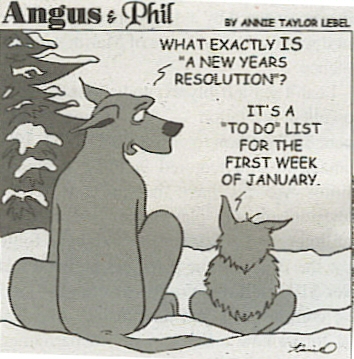
New year, new page, new leaf, new look... we can't help but associate the beginning of the year with starting new projects, or resolving to change things, or give up things.

I'd like us to think about the things we resolve NOT to do:

I resolve not to make fun of my sister's dog
I resolve not to open the 2nd bottle of wine

But let's not be limited by reality or practicality:

I resolve not to invade Iraq
I resolve never to die without informing you of place, date and time

Have fun with free-listing over the next week. Then look back and see how parts of those lists could be shaped into a poem.

Write well.
L
x

Tuesday, January 11, 2011

Blog Visit: a hungry writing prompt

Hello everyone. I'll be back to AppleHouse properly this weekend, once I'm home again in France. In the meantime there are delayed flights and missed connections to negotiate out of Miami and London. The joys of travel : )


If you'd like a writing prompt you could visit The Hungry Writer blog and respond to the prompt at the end of my post, either in prose or poetry. There'll be more prompts as this project continues so please feel free to follow it too. It would be lovely to see you there.

Write well.
L
x

Tuesday, January 04, 2011

Welcome to 2011

I'm on holiday in Florida until the middle of January so it will be a little while until I get back properly to AppleHouse but in the meantime here's a poem by a poet whose words always speak to me very loudly:

Green-Striped Melons

They lie
under stars in a field.
They lie under rain in a field.
Under sun.

Some people
are like this as well—
like a painting
hidden beneath another painting.

An unexpected weight
the sign of their ripeness.


Jane Hirshfield


Perhaps her words will inspire you to write about something hidden, something that doesn't reveal itself easily but which rewards us when we do notice it.

Write well
L
x

Friday, December 24, 2010

Wonder and joy


Ffion Richards
in her prize-winning costume:
The Enormous Crocodile

Thank you everyone, poets and writers, readers and passers-by who have inspired me to keep blogging along.

To close the year I have a poem by my great-niece that is full, appropriately, of wonder and joy:


wen the snow is drop in,
it is lite,
the snow it is litlee
drop in drop in
it is like the sky is cumin undun,
frowin snowballs,
making a snowman today.


Ffion Richards, age 5


I wish you all a lovely holiday and a happy and healthy 2011 full of wonder and joy.

L
x