Showing posts with label list poems. Show all posts

Friday, May 06, 2011

The Beautiful List

I've spoken about and shared list poems a couple of times before but I really don't think we can have too much of a good thing. List poems, done well, sing to us because of their deceptive simplicity: they wear the disguise of an ordinary everyday thing (shopping list, to do list etc) but the poet's choice of form and language lifts them up out of the ordinary and makes them extra-ordinary.

The following poem, by Tim Nolan, (which you can listen to HERE on The Writer's Almanac before you read it), slows our reading down with its short couplets. It asks us to pay the same amount of attention to the 'forgotten'. But this isn't just a poem about a literal change of season. The introduction of the human relationship in the middle of the poem - the flush of your face/ so much - asks me to reconsider the other imagery, the statements at the close of the poem, and the title as metaphor. Here it is and many thanks to Tim for giving his permission:


Long Winter

So much I've forgotten
the grass

the birds
the close insects

the shoot—the drip—
the spray of the sprinkler

freckles—strawberries—
the heat of the Sun

the impossible
humidity

the flush of your face
so much

the high noon
the high grass

the patio ice cubes
the barbeque

the buzz of them—
the insects

the weeds—the dear
weeds—that grow

like alien life forms—
all Dr. Suessy and odd—

here we go again—
we are turning around

again—this will all
happen over again—

and again—it will—

Tim Nolan

If you're in the UK or Europe
then check out the The Book Depository
for Tim's collection, The Sound of It.

What do you take from that penultimate couplet and the final line on its own? Inevitability, acceptance, understanding?

I take comfort from it; repetition in all its guises can be comforting. Although my comfort is tinged by inquietude. I'm not sure I want another long winter, I'm not sure that I want some things to happen over again. But I also know that my experience of life is deepened by living through change.

Poems that make us think, that shift us between different emotions, these are the ones to cherish.

I don't want to be prescriptive with a poetry prompt. Let this poem work on you through several readings then set out on a journey of your own.

Write well.
L
x

Tuesday, January 18, 2011

I resolve not to...

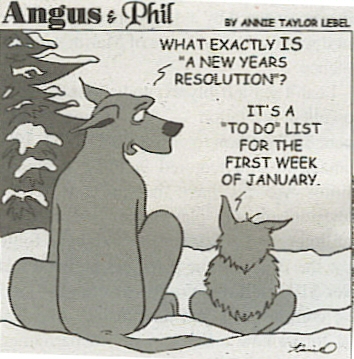
New year, new page, new leaf, new look... we can't help but associate the beginning of the year with starting new projects, or resolving to change things, or give up things.

I'd like us to think about the things we resolve NOT to do:

I resolve not to make fun of my sister's dog
I resolve not to open the 2nd bottle of wine

But let's not be limited by reality or practicality:

I resolve not to invade Iraq
I resolve never to die without informing you of place, date and time

Have fun with free-listing over the next week. Then look back and see how parts of those lists could be shaped into a poem.

Write well.
L
x

Sunday, December 19, 2010

I believe...

I believe that the best poetry looks at the world from a slant point of view. If, as poets, we approach a subject straight on, talk directly about our ideas and feelings, we can risk being overly sentimental or didactic. And no one really enjoys reading things that either make us feel like a voyeur or someone on the receiving end of a finger wagging lesson.

Emily Dickinson sums up this idea up:

Emily Dickinson

Tell all the Truth but tell it slant—

Success in Circuit lies
Too bright for our infirm Delight
The Truth's superb surprise

As Lightning to the Children eased
With explanation kind
The Truth must dazzle gradually
Or every man be blind—


I like that line: The Truth must dazzle gradually.

And that's exactly how I feel about the following poem by Michael Blumenthal:


What I Believe

I believe there is no justice,
but that cottongrass and bunchberry
grow on the mountain.

I believe that a scorpion's sting
will kill a man,
but that his wife will remarry.

I believe that, the older we get,
the weaker the body,
but the stronger the soul.

I believe that if you roll over at night
in an empty bed,
the air consoles you.

I believe that no one is spared
the darkness,
and no one gets all of it.

I believe we all drown eventually
in a sea of our making,
but that the land belongs to someone else.

I believe in destiny.
And I believe in free will.

I believe that, when all
the clocks break,
time goes on without them.

And I believe that whatever
pulls us under,
will do so gently

so as not to disturb anyone,
so as not to interfere
with what we believe in.


Michael Blumenthal
from Days We Would Rather Know
Pleasure Boat Studio, 2005

Can you write a 'credo' poem, a list things you, or someone else, believes in, but make that poem speak to other people too? I think part of this poem's success is how it shifts between points of view, from I to you to we. What matters to the narrator becomes something that matters to the reader (the personal you), to the world in general (the universal you), and to all of us (we).

I like how concrete images are set against abstract ideas: justice/cottongrass and bunchberry, clocks break/time goes on. I like the swings between opposites: weaker/stronger, sea/land. And I like how the rhythm of the poem changes with the enjambement (the read on lines) between the last two stanzas, how it gently extends our reading, and thus our understanding.

There's a quiet voice behind the poem, but it has authority too. The use of the first person, the I, often has that effect.

I suggest a poem of no more than 40 lines that draws on some of the craft choices in this poem: juxtaposition of image and idea, shifts between opposites, and a deliberate choice of point/s of view.

Write well.
L x

Monday, May 25, 2009

May Poem Prompt 2

Among the Things He Does Not Deserve

Greek olives in oil, fine beer, the respect of colleagues,
the rapt attention of an audience, pressed white shirts,
just one last-second victory, sympathy, buttons made
to resemble pearls, a pale daughter, living wages, a father
with Italian blood, pity, the miraculous reversal of time,
a benevolent god, good health, another dog, nothing
cruel and unusual, spring, forgiveness, the benefit
of the doubt, the next line, cold fingers against his chest,
rich bass notes from walnut speakers, inebriation, more ink,
a hanging curve, great art, steady rain on Sunday, the purr
of a young cat, the crab cakes at their favorite little place,
the dull pain in his head, the soft gift of her parted lips.


Dan Albergotti
from The Boatloads
BOA Editions, 2008

Buy from The Book Depository - Free Shipping Worlwide

I've posted 'list poems' before, so I'm sure the idea won't be new to you, but it's true that they look easier to create successfully than they actually are . We need to find the right rhythm to carry the reader through the poem, the right blend of imagery (precise or general, concrete or abstract), general comment or statement, and, at the end, the reader needs to feel as if they've been exposed to more than just a list. There might be a sense of revelation, or surprise, or an insight into someone's experience that, somehow, informs our own.

I've read Dan Albergotti's poem several times and I'm still not exactly sure of what's behind it, e.g. is the 'he' of the title the narrator speaking about himself? But that doesn't matter to me because there's so much in the poem that speaks so clearly to me.

Here are a just a couple of things that stood out for me, but I could talk about every line:

1. The rhythm in line 2 that's broken into two parts - read it aloud and hear the precision and care contained in those three one syllable wordsthe of the final image: pressed white shirts

2. the miraculous reversal of time: coming after the title, and after the reading the poem to the end, then reading this abstract image again gives me that sense of regret that I've felt now and again in my life... if only I could go back an hour, a week, a year. Has everyone felt that dread at sometime in their lives?

3. How it begins and ends with food: greek olives, crab cakes. But that's probably just me - I love reading and writing about food :)

So onto your poem. Brainstorm for a title first - really brainstorm. Use the phrase - Among the things... and see what emerges when you write freely...

Among the things:
she'd like to forget
they never said
he said he'd never do
you will never miss


That's just off the top of my head... there must be dozens and dozens more.

Choose one and see where it leads you.

And here's a list poem of mine that was published a couple of years ago in the New Welsh Review:

Olives

Plump ‘Queens’ glistening in oil,
the size of small eggs, or little

beads of green stuffed with garlic, jalapeno,
or laced with herbs and sun-dried tomato,

or the glossy black ones we ate
in Juan Carlos’ bar on Carrer d’Albet

with white anchovies and litres of sweet cava
then walked home up Via Laietana

through Eixample, up Carrer
St Juan to the apartment we rented that year,

opposite the supermercado where I bought them in tins,
con huesos, or pitted – sin

huesos, the Spanish for olive pits and bones,
as I remember us then – our bodies

slipped free from their bones, the last time
we made love, the last time we made each other come.

Lynne Rees

I hardly ever write with a regular rhyme scheme but the rhyming couplets (mostly slant rhymes) felt right for the subject matter and music of the poem.

Write well. I look forward to reading your work.

Lynne